
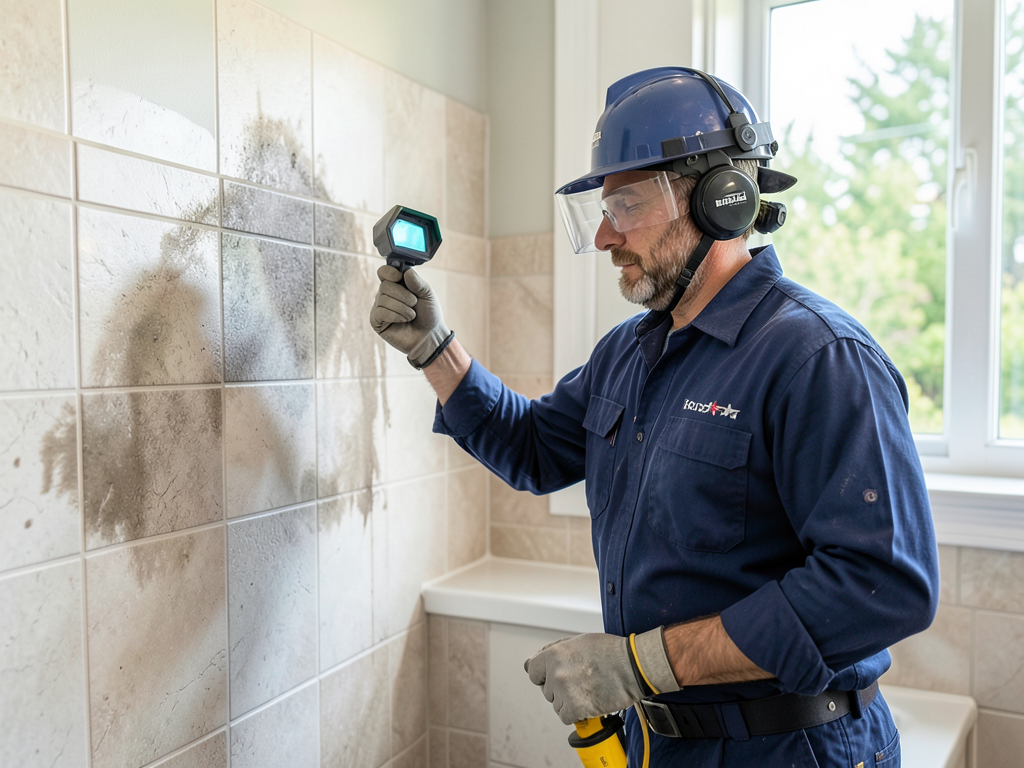
How to find hidden mold growth behind bathroom tile in Rose City Park
If you notice musty odors cracked grout or loose tiles in your Rose City Park bathroom you might have hidden mold growth behind your shower walls. Portland’s high humidity and older home construction create perfect conditions for mold to thrive in wall cavities where you cannot see it. This guide explains how to identify the warning signs understand the risks and know when professional remediation is necessary. Portland building code moisture management requirements.
How to Tell if Mold is Growing Behind Your Tile
Hidden mold behind bathroom tile often starts with small warning signs that homeowners miss. The most common indicator is a persistent musty odor that appears when you run hot water or after showers. This smell comes from microbial volatile organic compounds released by active mold colonies. Water damage restoration for Hillsboro offices and commercial spaces.
Visual clues include cracked or missing grout lines especially in corners where water collects. If you press on tiles and they feel soft or move slightly the adhesive has likely failed due to moisture damage. Dark spots appearing on caulk lines or along tile edges indicate water intrusion that could be feeding mold growth. Emergency water damage restoration in Portland that arrives in under an hour.
Another diagnostic method is the tap test. Use a screwdriver handle to tap on tile surfaces. Solid tiles produce a sharp consistent sound. Hollow-sounding tiles suggest the backing material has deteriorated or become waterlogged. This test helps identify areas where moisture has compromised the wall structure. Water Damage Restoration Wilsonville.
Pay attention to temperature differences. Areas with hidden moisture feel cooler to the touch because water absorbs heat. Use your hand to feel for cold spots on shower walls particularly near the floor where plumbing connections often leak.
Why Portland Homes are Prone to Bathroom Mold
Rose City Park homes built primarily between the 1920s and 1950s face unique moisture challenges. Many bathrooms lack proper ventilation fans relying instead on windows that homeowners often keep closed during Portland’s rainy season. This creates ideal conditions for moisture accumulation.. Read more about How to stop bathroom ceiling mold from coming back in your Montavilla bungalow.
Portland’s average relative humidity ranges from 70% to 85% during winter months. When warm shower steam meets cool exterior walls condensation forms inside wall cavities. Older homes often lack vapor barriers that modern building codes require allowing moisture to penetrate drywall and wood framing.
The Willamette Valley’s clay soil contributes to foundation moisture issues. Homes in Rose City Park sit on Missoula Flood deposits that drain poorly. This soil type retains water increasing hydrostatic pressure against basement and first-floor bathroom walls. Plumbing penetrations through these walls become vulnerable points where water can enter wall cavities.
Many Rose City Park homes use galvanized steel plumbing that corrodes from the inside out. These pipes develop pinhole leaks that spray water directly into wall cavities behind shower surrounds. The leaks are small enough to avoid immediate detection but large enough to create sustained moisture problems.
The Danger of the ‘Iceberg Effect’
What you see on the surface represents only a fraction of the mold problem. The ‘Iceberg Effect’ describes how visible mold growth typically accounts for just 10% of the total contamination. Behind your bathroom tile mold colonies can spread across entire wall cavities affecting studs insulation and electrical wiring.
Portland’s building codes require specific moisture management standards under Oregon Residential Specialty Code Chapter 15. When these standards are not met or have degraded over time mold can establish itself in hidden areas. The mold feeds on organic materials like wood studs and paper-faced drywall compromising structural integrity.
Stachybotrys chartarum commonly known as black mold thrives in Portland’s climate. This toxic mold species produces mycotoxins that can cause respiratory issues headaches and immune system suppression. Children elderly individuals and those with pre-existing conditions face higher health risks from exposure.
The longer mold grows undetected the more expensive remediation becomes. What starts as a simple grout repair can escalate to requiring complete shower demolition and reconstruction. Early detection through professional inspection can save thousands in restoration costs. EPA mold remediation guidelines.
Professional Remediation vs. DIY
Understanding when to call professionals versus attempting DIY cleaning is crucial for homeowner safety. The following comparison helps determine the appropriate response based on visible conditions and suspected mold extent. Professional mold removal and remediation for Beaverton homeowners.
| Condition | DIY Appropriate | Professional Required |
|---|---|---|
| Surface mold on caulk only | Yes – Clean with antimicrobial solution | No |
| Cracked grout with no odor | Yes – Regrout and seal | No |
| Musty smell present | No – Indicates hidden growth | Yes – Professional inspection needed |
| Soft or loose tiles | No – Structural damage likely | Yes – Demolition and remediation required |
| Visible mold on multiple surfaces | No – Extensive contamination | Yes – Full remediation protocol |
DIY cleaning methods like bleach solutions only address surface mold. When mold grows behind tiles it penetrates porous materials and establishes root systems in drywall and wood. Surface cleaning provides temporary improvement but allows the underlying problem to worsen.
The Restoration Process
Professional mold remediation follows established protocols from the IICRC S520 Standard for Mold Remediation. This process ensures complete removal while preventing cross-contamination to other home areas. IICRC S520 Standard for Mold Remediation.
- Containment Setup
Technicians install polyethylene barriers and create negative air pressure using HEPA-filtered air scrubbers. This prevents mold spores from spreading to other rooms during removal work.
- Moisture Assessment
Using moisture meters and thermal imaging cameras technicians map the extent of water damage. This helps identify all affected areas not just those with visible signs.
- Material Removal
Infected materials including tile backer board and damaged studs are carefully removed and bagged for disposal. All work follows EPA guidelines for hazardous material handling.
- Cleaning and Treatment
Remaining structural elements receive HEPA vacuuming to remove loose spores followed by antimicrobial treatments. Affected areas are encapsulated to prevent future growth.
- Drying and Verification
Industrial dehumidifiers and air movers reduce moisture content to safe levels. Final testing confirms remediation success before reconstruction begins.
The entire process typically takes 3-5 days depending on damage extent. Homeowners should expect noise from equipment and limited bathroom access during active remediation.
Prevention Strategies for Rose City Park Homes
Preventing future mold growth requires addressing the moisture sources that caused the initial problem. Start with improving bathroom ventilation. Install a properly sized exhaust fan vented to the exterior not into attic space. Run the fan during showers and for 30 minutes afterward.
Check and maintain grout lines annually. Cracked or missing grout allows water to penetrate behind tiles. Use sanded grout for joints wider than 1/8 inch and seal all grout lines every 1-2 years with a penetrating sealer.
Monitor indoor humidity levels using a hygrometer. Keep relative humidity between 30% and 50%. During Portland’s wet season you may need a whole-house dehumidifier to maintain these levels.
Schedule annual plumbing inspections to check for small leaks before they cause major damage. Pay special attention to shower pan liners which can deteriorate after 15-20 years in older homes.
Insurance Considerations
Standard homeowners insurance policies in Oregon typically cover sudden and accidental water damage but exclude long-term moisture problems. If your mold issue resulted from a burst pipe or appliance failure insurance may cover remediation costs.
However insurance companies often deny claims for mold resulting from maintenance issues like failed grout or lack of ventilation. Document all visible damage with photos before beginning any cleanup. Contact your insurance provider immediately after discovering potential mold problems. Document Drying & Restoration.
Professional restoration companies can help navigate insurance claims by providing detailed damage assessments and working directly with adjusters. This service often proves valuable when dealing with complicated coverage questions.
Local Building Code Requirements
Portland’s building codes have evolved to address moisture management more effectively. Current codes require cement backer board instead of drywall in wet areas proper vapor barriers and specific waterproofing membrane installation methods.
Under Multnomah County regulations any bathroom remodeling work must comply with current moisture management standards. This includes proper slope-to-drain requirements waterproof membrane installation and appropriate ventilation sizing based on bathroom volume.
Professional remediation companies understand these requirements and ensure all reconstruction work meets or exceeds local codes. This compliance protects homeowners from future liability and ensures the work will pass inspection if the home is sold.
When to Call for Professional Help
Call (503) 882-7766 today if you notice any of these warning signs in your Rose City Park bathroom: persistent musty odors soft or loose tiles visible mold growth or water stains on walls or ceilings below bathrooms. Early intervention prevents structural damage and protects your family’s health.
Professional inspection includes moisture mapping air quality testing and detailed damage assessment. Our technicians use thermal imaging to see through walls and identify hidden moisture sources that homeowners cannot detect.
Don’t wait until mold spreads throughout your home. Pick up the phone and call (503) 882-7766 before the next Portland rainstorm compounds your moisture problems. We provide free initial inspections and can often begin remediation work within 24 hours of your call.
Frequently Asked Questions
How much does mold remediation behind bathroom tile cost?
Costs vary based on damage extent but typically range from $2500 to $8000 for standard bathroom mold remediation. Factors affecting price include the size of affected area type of materials requiring removal and whether structural repairs are needed.
Can I stay in my home during mold remediation?
Yes in most cases. Professional remediation uses containment barriers and negative air pressure to isolate the work area. You may need to avoid using the affected bathroom and stay clear of the containment zone during active work hours.
How long does mold remediation take?
Standard bathroom mold remediation typically requires 3-5 days. This includes containment setup material removal cleaning drying and final verification testing. Complex cases involving structural damage may require additional time.
Will mold come back after remediation?
Proper remediation with moisture source correction prevents mold return. Our process includes identifying and fixing the underlying moisture problem not just removing visible mold. We provide maintenance recommendations to prevent future growth.
{
“@context”: “https://schema.org”,
“@type”: “BlogPosting”,
“headline”: “How to find hidden mold growth behind bathroom tile in Rose City Park”,
“description”: “Discover how to detect hidden mold behind bathroom tile in Rose City Park homes. Learn warning signs, risks, and when to call professionals for mold remediation.”,
“wordCount”: 1679,
“datePublished”: “2026-03-19T15:42:00.000Z”,
“dateModified”: “2026-03-19T15:42:00.000Z”,
“inLanguage”: “en-US”,
“mainEntityOfPage”: {
“@type”: “WebPage”,
“@id”: “https://evergreenwaterdamagerestorationportland.com”
},
“publisher”: {
“@type”: “LocalBusiness”,
“name”: “Evergreen Water Damage Restoration Portland”,
“url”: “https://evergreenwaterdamagerestorationportland.com”
},
“author”: {
“@type”: “Organization”,
“name”: “Evergreen Water Damage Restoration Portland”,
“url”: “https://evergreenwaterdamagerestorationportland.com”
},
“image”: {
“@type”: “ImageObject”,
“url”: “https://evergreenwaterdamagerestorationportland.com/wp-content/uploads/2026/03/how-to-find-hidden-mold-growth-behind-bathroom-til-1.png”
}
}
{
“@context”: “https://schema.org”,
“@type”: “LocalBusiness”,
“name”: “Evergreen Water Damage Restoration Portland”,
“url”: “https://evergreenwaterdamagerestorationportland.com”,
“address”: {
“@type”: “PostalAddress”,
“addressLocality”: “Portland”
},
“areaServed”: {
“@type”: “City”,
“name”: “Portland”
}
}
{
“@context”: “https://schema.org”,
“@type”: “FAQPage”,
“mainEntity”: [
{
“@type”: “Question”,
“name”: “How much does mold remediation behind bathroom tile cost?”,
“acceptedAnswer”: {
“@type”: “Answer”,
“text”: “Costs vary based on damage extent but typically range from $2500 to $8000 for standard bathroom mold remediation. Factors affecting price include the size of affected area type of materials requiring removal and whether structural repairs are needed.”
}
},
{
“@type”: “Question”,
“name”: “Can I stay in my home during mold remediation?”,
“acceptedAnswer”: {
“@type”: “Answer”,
“text”: “Yes in most cases. Professional remediation uses containment barriers and negative air pressure to isolate the work area. You may need to avoid using the affected bathroom and stay clear of the containment zone during active work hours.”
}
},
{
“@type”: “Question”,
“name”: “How long does mold remediation take?”,
“acceptedAnswer”: {
“@type”: “Answer”,
“text”: “Standard bathroom mold remediation typically requires 3-5 days. This includes containment setup material removal cleaning drying and final verification testing. Complex cases involving structural damage may require additional time.”
}
},
{
“@type”: “Question”,
“name”: “Will mold come back after remediation?”,
“acceptedAnswer”: {
“@type”: “Answer”,
“text”: “Proper remediation with moisture source correction prevents mold return. Our process includes identifying and fixing the underlying moisture problem not just removing visible mold. We provide maintenance recommendations to prevent future growth.”
}
}
]
}
{
“@context”: “https://schema.org”,
“@type”: “HowTo”,
“name”: “Professional Mold Remediation Process”,
“step”: [
{
“@type”: “HowToStep”,
“position”: 1,
“name”: “Containment Setup”,
“text”: “Technicians install polyethylene barriers and create negative air pressure using HEPA-filtered air scrubbers. This prevents mold spores from spreading to other rooms during removal work.”
},
{
“@type”: “HowToStep”,
“position”: 2,
“name”: “Moisture Assessment”,
“text”: “Using moisture meters and thermal imaging cameras technicians map the extent of water damage. This helps identify all affected areas not just those with visible signs.”
},
{
“@type”: “HowToStep”,
“position”: 3,
“name”: “Material Removal”,
“text”: “Infected materials including tile backer board and damaged studs are carefully removed and bagged for disposal. All work follows EPA guidelines for hazardous material handling.”
},
{
“@type”: “HowToStep”,
“position”: 4,
“name”: “Cleaning and Treatment”,
“text”: “Remaining structural elements receive HEPA vacuuming to remove loose spores followed by antimicrobial treatments. Affected areas are encapsulated to prevent future growth.”
},
{
“@type”: “HowToStep”,
“position”: 5,
“name”: “Drying and Verification”,
“text”: “Industrial dehumidifiers and air movers reduce moisture content to safe levels. Final testing confirms remediation success before reconstruction begins.”
}
],
“image”: “https://evergreenwaterdamagerestorationportland.com/wp-content/uploads/2026/03/how-to-find-hidden-mold-growth-behind-bathroom-til-1.png”
}
{
“@context”: “https://schema.org”,
“@type”: “BreadcrumbList”,
“itemListElement”: [
{
“@type”: “ListItem”,
“position”: 1,
“name”: “Home”,
“item”: “https://evergreenwaterdamagerestorationportland.com”
},
{
“@type”: “ListItem”,
“position”: 2,
“name”: “Blog”,
“item”: “https://evergreenwaterdamagerestorationportland.com/blog”
},
{
“@type”: “ListItem”,
“position”: 3,
“name”: “How to find hidden mold growth behind bathroom tile in Rose City Park”
}
]
}
{
“@context”: “https://schema.org”,
“@type”: “Service”,
“serviceType”: “Water Damage Restoration”,
“provider”: {
“@type”: “LocalBusiness”,
“name”: “Evergreen Water Damage Restoration Portland”,
“url”: “https://evergreenwaterdamagerestorationportland.com”
},
“areaServed”: {
“@type”: “City”,
“name”: “Portland”
},
“description”: “Discover how to detect hidden mold behind bathroom tile in Rose City Park homes. Learn warning signs, risks, and when to call professionals for mold remediation.”
}