Menu

Fire Sprinkler Water Cleanup in Portland – Immediate 24/7 Response to Stop Damage Fast

When fire sprinklers discharge unexpectedly, every minute counts. Our certified fire sprinkler water cleanup teams arrive fast across Portland to extract water, dry structures, and prevent mold before it takes hold.

Slider Image 1
Slider Image 2
Slider Image 3
Slider Image 4
Slider Image 5
Slider Image 7
Slider Image 8
Slider Image 9
Slider Image 10
Slider Image 11

Why Fire Sprinkler Discharge Creates an Urgent Water Emergency in Portland

A single activated fire sprinkler head releases 15 to 40 gallons of water per minute. That means hundreds of gallons flooding your space before someone reaches the shutoff valve. You are not dealing with a slow leak. This is a pressurized deluge that soaks carpets, seeps into drywall, and saturates ceiling cavities within minutes.

Portland's older commercial buildings and historic warehouse conversions often house aging fire suppression systems with galvanized piping that corrodes over time. When a head bursts from accidental impact or pressure fluctuations, stagnant water from those pipes pours out first. That water carries rust sediment and biofilm that stains finishes and complicates cleanup. In Portland's mild, humid climate, moisture trapped in wall cavities or beneath flooring creates ideal conditions for microbial growth within 24 to 48 hours.

Accidental sprinkler discharge cleanup requires immediate water extraction to prevent secondary damage. The longer pressurized water sits in porous materials like engineered wood subfloors or acoustic ceiling tiles, the more extensive the damage becomes. Fire sprinkler water damage restoration is not the same as fixing a plumbing leak. The volume and velocity demand industrial-grade extraction equipment and rapid structural drying to salvage building materials and avoid catastrophic mold remediation later.

Emergency sprinkler water removal means stopping the water source, extracting standing water, and beginning dehumidification immediately. Portland property owners who delay this process often face structural repairs that cost ten times more than rapid intervention would have.

Why Fire Sprinkler Discharge Creates an Urgent Water Emergency in Portland
How Professional Fire Suppression System Water Extraction Works

How Professional Fire Suppression System Water Extraction Works

Burst fire sprinkler flood remediation follows a methodical sequence designed to minimize loss and restore safety. The first step is source control. We verify the fire suppression system valve is closed and no additional water is entering the space. We document affected areas with moisture mapping using thermal imaging cameras and penetrating moisture meters. This is not guesswork. We measure moisture content in walls, subfloors, and ceilings to establish baseline readings and track drying progress.

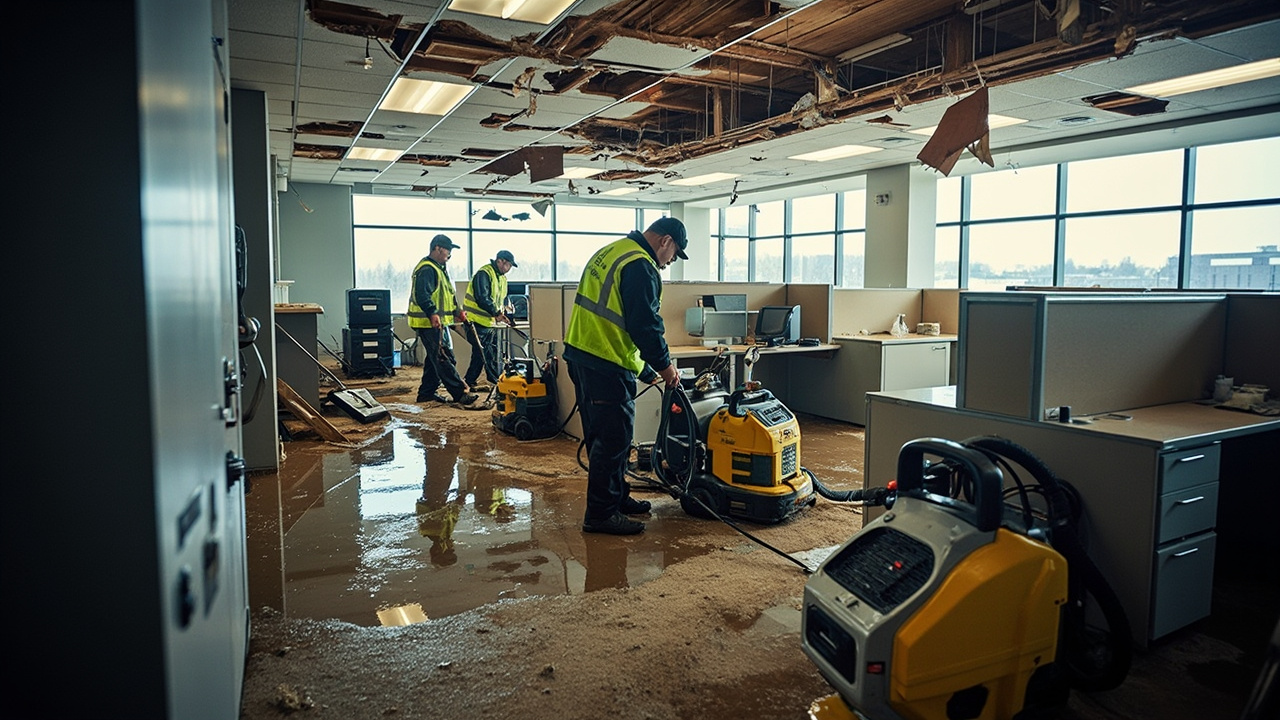
Next comes rapid water extraction. We deploy truck-mounted extractors and portable pumps to remove standing water from floors, carpets, and furnishings. High-volume extraction prevents water from wicking further into porous materials. For spaces with tile or sealed concrete, we use weighted extraction wands that pull water from grout lines and surface irregularities. Carpeted areas require specialized tools that apply compression and suction simultaneously to extract water trapped in padding and backing.

After extraction, we establish controlled drying conditions. We position axial air movers to create laminar airflow across wet surfaces, which accelerates evaporation. Low-grain refrigerant dehumidifiers pull moisture from the air and lower relative humidity to prevent condensation on cooler surfaces. We monitor temperature and humidity every 12 hours, adjusting equipment placement as materials release moisture.

We remove non-salvageable materials like saturated insulation, delaminated drywall, and swollen particleboard. We treat affected framing and structural materials with antimicrobial applications to inhibit mold colonization during the drying process. Fire sprinkler water damage restoration requires understanding building assemblies and how moisture migrates through them. Portland's typical wood-frame construction with plaster or drywall finishes demands careful material removal to avoid damaging adjacent unaffected areas.

What Happens During Emergency Fire Sprinkler Water Removal

Fire Sprinkler Water Cleanup in Portland – Immediate 24/7 Response to Stop Damage Fast
01

Arrival and Initial Containment

Our crews arrive with truck-mounted extraction units and containment barriers. We verify the sprinkler system is isolated, establish safety zones, and begin moisture mapping with thermal imaging to identify hidden saturation in wall cavities and ceiling plenums. We photograph all affected areas for insurance documentation and begin water extraction within minutes of arrival to prevent further wicking into structural materials.
02

Extraction and Drying Setup

We remove standing water using weighted extraction wands and truck-mounted vacuum systems. Carpets are lifted to extract water from padding and subfloors. We position commercial air movers and low-grain dehumidifiers to establish controlled drying conditions. Moisture meters track drying progress in real time. We remove saturated insulation and cut drywall flood cuts to expose wet framing for airflow and prevent trapped moisture pockets.
03

Monitoring and Final Verification

We monitor affected areas every 12 hours, adjusting equipment and documenting moisture readings until materials reach acceptable dry standards. We apply antimicrobial treatments to exposed framing and treat salvageable contents. Once moisture levels stabilize, we provide a detailed drying log and certificate of completion for your insurance carrier. The space is left clean, dry, and ready for reconstruction without hidden moisture risks.

Why Portland Property Owners Choose Evergreen Water Damage Restoration Portland

Fire sprinkler water damage restoration demands experience with both water extraction and building science. Evergreen Water Damage Restoration Portland has managed sprinkler discharge events in Portland's historic Brewery Blocks, Pearl District loft conversions, and industrial spaces along the Willamette River. We understand how water migrates through post-and-beam timber construction, brick facades with interior wood framing, and modern concrete tilt-up buildings with steel bar joists.

Portland's building codes require fire suppression systems in most commercial spaces and multifamily buildings over three stories. When those systems discharge accidentally, you need a team that understands fire suppression infrastructure, not just general water cleanup. We coordinate with fire sprinkler contractors to verify system integrity before releasing spaces back to occupancy. We document loss thoroughly for commercial property insurance claims, providing moisture maps, equipment logs, and material inventories that adjusters need to process claims quickly.

Our response time matters. We dispatch crews 24 hours a day from our Portland facility, reaching most commercial properties within 90 minutes of your call. That speed prevents the exponential damage that occurs when pressurized water sits in building assemblies. Portland's moderate humidity means drying times are manageable if intervention is immediate, but delayed response in our marine climate allows mold to establish quickly.

We carry commercial-grade extraction and drying equipment sized for large-loss events. A single sprinkler head discharging for 20 minutes releases 400 gallons. Multi-head discharge events or delayed shutoff can flood thousands of square feet. Our truck-mounted extractors and trailer-mounted dehumidification systems handle high-volume water removal that portable equipment cannot match. We manage projects from initial emergency response through final verification, eliminating coordination headaches for property managers dealing with insurance adjusters, tenants, and contractors simultaneously.

What You Can Expect from Our Fire Sprinkler Water Cleanup Service

24/7 Emergency Dispatch and Response

We answer calls day and night. When you call (503) 882-7766, you speak with a dispatcher who deploys crews immediately, not an answering service that takes messages. Our average response time to Portland commercial properties is 90 minutes or less. We arrive with extraction equipment, moisture detection tools, and containment materials ready to begin work. No waiting for equipment delivery or scheduling delays. Emergency sprinkler water removal starts the moment our trucks arrive, and we work continuously until standing water is removed and drying equipment is operational.

Thorough Moisture Assessment and Documentation

We map every affected area using thermal imaging cameras and penetrating moisture meters. You receive detailed floor plans showing moisture readings, affected materials, and equipment placement. We photograph all damage before beginning work and document daily progress with updated moisture readings. This documentation is critical for insurance claims and provides the evidence adjusters need to approve coverage quickly. We coordinate directly with your insurance carrier, providing technical reports and material inventories that eliminate back-and-forth delays. You get transparency and accountability throughout the entire drying process.

Complete Drying and Structural Preservation

We do not stop at surface drying. Our goal is returning structural materials to pre-loss moisture content levels verified by meter readings, not visual inspection. We monitor drying progress every 12 hours and adjust equipment placement as materials release moisture. Walls, subfloors, and ceiling assemblies dry at different rates. We use scientific drying principles and psychrometric calculations to optimize conditions, not trial and error. You receive a certificate of completion with final moisture readings proving the space is dry and ready for reconstruction without hidden moisture that will cause problems later.

Post-Remediation Verification and Support

After drying is complete, we provide detailed project documentation including all moisture logs, equipment runtime records, and material disposal manifests. If reconstruction is needed, we coordinate with your general contractor to ensure continuity. We answer questions from insurance adjusters and provide technical clarification as claims are processed. If concerns arise about drying effectiveness, we return to verify conditions at no charge. Our goal is complete peace of mind that fire sprinkler water damage has been mitigated properly and your property is protected from long-term moisture issues.

Frequently Asked Questions

You Have Questions,
We Have Answers

Is fire sprinkler water clean? +

No. Fire sprinkler water sits stagnant in pipes for months or years. It collects rust, sediment, bacteria, and biofilm. When it discharges, expect black or brown water with a foul odor. This contaminated water poses health risks and stains everything it touches. Immediate extraction is critical. The longer it sits, the more damage it causes to floors, walls, and belongings. Portland buildings with older sprinkler systems face heavier contamination. Act fast. Call a water damage restoration team with commercial experience to handle the hazardous cleanup and prevent mold growth in our humid climate.

What is the 3x rule for sprinklers? +

The 3x rule means sprinkler heads need three times their diameter in clearance from obstructions. For example, a standard sprinkler with a 6-inch diameter requires 18 inches of clearance. This ensures proper spray pattern coverage during a fire. Blocked sprinklers fail to protect your property. In Portland commercial buildings, this matters during renovations when contractors add lighting, HVAC ducts, or storage racks. Violations create liability and void insurance claims. After any building modification, inspect sprinkler clearances. If a system activates with obstructions present, water damage worsens and fire protection fails when you need it most.

How often do sprinkler systems need to be flushed? +

Dry pipe and preaction systems require annual flushing per NFPA 25 standards. Wet pipe systems need quarterly inspections and flushing every five years or when contamination is suspected. Portland buildings with older infrastructure face greater sediment buildup. Regular flushing prevents discharge of heavily contaminated water during emergencies. Skipping maintenance creates worse water damage when systems activate. Black water filled with rust and debris causes more destruction than clear water. Schedule inspections before problems occur. If your system activates and releases foul water, you face a bigger cleanup job and potential mold issues in our damp climate.

How to drain water from a fire sprinkler system? +

Draining a fire sprinkler system requires a certified technician. The process involves closing the main valve, opening drain valves at the system's low points, and using compressed air to clear remaining water from pipes. Never attempt this yourself. Improper draining damages pipes, leaves standing water, and violates fire codes. In Portland, your building loses fire protection during draining, requiring notification to local fire marshals and potentially a fire watch. After sprinkler activation, professionals drain the system as part of water damage restoration. They also inspect for pipe damage and coordinate with sprinkler contractors for repairs and refilling.

Why does fire sprinkler water smell bad? +

Fire sprinkler water smells like sewage because it sits stagnant in pipes for years. Bacteria, biofilm, rust, and decomposing organic matter create hydrogen sulfide gas, the rotten egg smell. The anaerobic environment in sealed pipes accelerates this process. When sprinklers activate, you get a sudden release of putrid black water. The smell penetrates porous materials like drywall, carpet, and insulation. In Portland's humid climate, the odor lingers and encourages mold growth. Standard cleaning does not eliminate it. You need professional extraction, antimicrobial treatment, and deodorization. Ventilation alone will not work. Address the contamination immediately to prevent permanent damage.

Should you still water your lawn in October? +

This question does not relate to fire sprinkler water cleanup. If you experienced a fire sprinkler discharge in your Portland commercial property, focus on immediate water extraction. Sprinkler water damage requires professional response within hours to prevent secondary damage. The contaminated water from fire suppression systems spreads quickly through floors and walls. Do not wait. Contact a water damage restoration company experienced with commercial fire sprinkler incidents. They handle extraction, structural drying, and contamination treatment. Delayed response leads to mold growth, structural damage, and business interruption. Your priority is protecting your property and minimizing downtime.

What is the 18 rule for fire sprinklers? +

The 18-inch rule requires clear space below sprinkler heads. No storage, equipment, or materials can sit within 18 inches of the sprinkler deflector. This clearance ensures water disperses properly during activation. Violations block spray patterns and create unprotected fire zones. In Portland warehouses and retail spaces, improper storage frequently violates this rule. Fire inspectors cite these violations. Worse, blocked sprinklers mean fires spread while water hits obstructions instead of flames. If your system activates with blocked heads, you get water damage without fire protection. Maintain clearances. After any sprinkler discharge, professionals assess if obstructions contributed to excessive damage.

Will vaping set off a sprinkler system? +

No. Vaping does not set off sprinkler systems. Sprinklers activate from heat, not smoke. Each head contains a glass bulb or fusible link that breaks at temperatures between 135 and 165 degrees Fahrenheit. Vape aerosol lacks the heat to trigger activation. However, vaping can set off smoke detectors in buildings with fire alarm systems. Confusion arises because people associate alarms with sprinklers. In Portland commercial buildings, accidental sprinkler discharge comes from mechanical damage, freezing pipes, or corrosion. If sprinklers activate without fire, you face massive water damage. Shut off the system immediately and call restoration professionals to extract contaminated water.

What is the NFPA rule for sprinkler obstruction? +

NFPA 13 and NFPA 25 define sprinkler obstruction rules. Objects cannot block spray patterns or sit within required clearances. The standards specify distances based on obstruction type and sprinkler characteristics. Continuous obstructions like beams, ducts, and light fixtures require specific spacing from sprinkler heads. In Portland commercial spaces, code inspectors enforce these rules strictly. Violations mean your system fails during fires and creates liability. After renovations, hire a sprinkler inspector to verify compliance. If obstructions exist during activation, water hits barriers instead of covering the fire zone. You get property damage without fire protection. Fix violations before emergencies occur.

What is the life expectancy of a fire sprinkler system? +

Fire sprinkler systems last 50 to 100 years with proper maintenance, but components fail sooner. Sprinkler heads last 20 to 50 years before needing replacement. Pipes corrode faster in older Portland buildings with galvanized steel systems. Corrosion creates leaks and releases contaminated water during activation. Rubber seals and gaskets degrade every 10 to 15 years. Age increases the chance of accidental discharge and worse water damage from sediment-filled pipes. Schedule inspections per NFPA 25 standards. If your aging system activates, expect heavy contamination. Professional restoration teams handle the hazardous cleanup and coordinate with sprinkler contractors for system repairs.

How Portland's Marine Climate Affects Fire Sprinkler Water Damage Recovery

Portland's average relative humidity ranges from 65% to 85% year-round. This persistent moisture in the air slows natural evaporation and extends drying times for water-damaged structures. When fire suppression system water extraction begins, the ambient humidity works against you. Materials like drywall and wood framing absorb atmospheric moisture even as dehumidifiers pull water out, creating a drying plateau that delays completion. Portland's moderate temperatures also mean heated air holds less moisture than warm climates, requiring precise psychrometric control to maintain drying conditions. Without commercial-grade dehumidification, materials never reach acceptable moisture content and remain vulnerable to mold colonization.

Portland's building stock includes significant historic properties with plaster walls, solid wood trim, and old-growth timber framing. These materials react differently to water damage than modern drywall and engineered lumber. Accidental sprinkler discharge cleanup in buildings like those in the Alphabet District or along NW 23rd Avenue requires understanding how dense plaster absorbs water slowly but releases it even slower. Evergreen Water Damage Restoration Portland has managed water emergencies in Portland for years, working with preservation standards that protect historic fabric while achieving complete drying. Our crews understand local construction methods and adjust techniques accordingly.
Water Damage Restoration Services in The Portland Area

Evergreen Water Damage Restoration proudly serves Portland and the surrounding areas, providing rapid and reliable water damage solutions whenever you need us. While our physical office is located conveniently for local operations, our dedicated teams are mobile and ready to deploy across the region. View our service area on the map to understand our reach, or simply call us to confirm if we cover your specific location. We are committed to extending our expert services to every community in need.

Address:
Evergreen Water Damage Restoration Portland, 239 NW 13th Ave, Portland, OR, 97209

Additional Services We Offer

Our news updates

Latest Articles & News from The Blogs

What happens when a well pump or pressure tank leaks in your Mapleton garage When a well pump or pressure…

What happens when a well pump or pressure tank leaks in your Mapleton garage

What happens when a well pump or pressure tank leaks in your Mapleton garage When a well pump or pressure…

Dealing with lead and asbestos during water damage repairs in older Portland neighborhoods

Dealing with lead and asbestos during water damage repairs in older Portland neighborhoods Portland's historic neighborhoods face unique challenges when…

Why converting your University Park basement into a bedroom requires extra moisture protection

Why converting your University Park basement into a bedroom requires extra moisture protection Portland’s University Park neighborhood, nestled near the…

Contact Us

Every hour you wait, damage spreads. Call Evergreen Water Damage Restoration Portland at (503) 882-7766 right now for immediate dispatch. Our crews are ready 24/7 with industrial extraction equipment and the expertise to stop fire sprinkler water damage fast.