
Professional Restoration for Shared Wall Water Leaks in Boise and Eliot Townhomes
When water leaks through shared walls in Boise and Eliot townhomes, the damage spreads fast and the complications multiply. Unlike single-family homes, townhome water damage involves shared firewalls, HOA insurance policies, and neighbor relations that can turn a simple leak into a legal maze. That’s why Portland homeowners in these historic neighborhoods trust IICRC-certified technicians who understand both the structural risks and the local building codes. IICRC certification standards.
Portland’s wet climate and aging infrastructure make shared-wall leaks especially common in neighborhoods like Boise and Eliot, where many townhomes date back to the early 1900s. These properties often feature balloon-frame construction and shared firewalls that allow moisture to migrate between units. When a pipe bursts or a roof leak develops, water can travel through wall cavities, saturating insulation and creating hidden mold colonies before anyone notices. Water damage restoration for Hillsboro offices and commercial spaces.
Quick action matters. The longer water sits in shared walls, the more it compromises structural integrity and indoor air quality. Our team responds 24/7 with industrial-grade extraction equipment and moisture mapping technology to locate every affected area. We coordinate directly with HOAs and property managers to ensure repairs meet Oregon Residential Specialty Code requirements while minimizing disruption to all residents. EPA mold guidelines.
Whether you’re dealing with a slow drip from an upstairs unit or sudden flooding from a failed water heater, professional restoration means more than just drying floors. It means protecting your investment, your neighbors, and your health with proven methods that meet or exceed IICRC S500 standards for water damage restoration. Professional mold removal and remediation for Beaverton homeowners.
Understanding Shared Wall Water Damage in Portland Townhomes
Shared wall construction in Portland’s historic townhomes creates unique vulnerabilities that homeowners in newer developments rarely face. The balloon-frame method used in early 20th-century buildings allows water to travel vertically through wall cavities, often appearing in lower units before the source is identified. This construction style, common in Boise and Eliot, means a leak on the third floor can manifest as ceiling damage two stories below. Emergency water damage restoration in Portland that arrives in under an hour.
Portland’s climate compounds these risks. With over 40 inches of annual rainfall and frequent freeze-thaw cycles, aging plumbing systems in these neighborhoods face constant stress. Copper pipes installed decades ago develop pinhole leaks, while galvanized supply lines corrode from the inside out. When these failures occur in shared-wall configurations, water spreads horizontally through firebreaks and insulation before pooling in the path of least resistance.
The structural implications are significant. Water traveling through shared walls can weaken load-bearing elements, compromise fire-rated assemblies, and create ideal conditions for mold growth behind drywall. Our technicians use thermal imaging and penetrating moisture meters to detect these hidden hazards, documenting damage that may extend beyond visible surfaces. This thorough assessment proves essential when coordinating repairs across multiple property lines and insurance policies.. Read more about When to call for a professional thermal imaging leak inspection in your Portland home.
Local building codes add another layer of complexity. Portland requires specific moisture management protocols for multi-unit structures, particularly when repairs involve fire-rated assemblies or structural elements. Our team maintains current knowledge of Oregon Construction Contractors Board requirements and works directly with city inspectors to ensure all restoration work meets code compliance standards.

Common Causes of Shared Wall Water Leaks in Boise and Eliot
Understanding the typical failure points helps homeowners recognize problems early. In Portland’s Boise and Eliot neighborhoods, several factors contribute to the high incidence of shared wall water damage.
Plumbing failures top the list. Aging copper supply lines in townhomes built before 1970 develop pinhole leaks from prolonged exposure to Portland’s mineral-rich water. These small failures often go unnoticed until water appears in adjacent units. Washing machine hoses, typically rated for five years of service, frequently fail in multi-story townhomes where vibration accelerates wear. When these hoses burst, water cascades through floor assemblies and into shared wall cavities. Washing Machine Overflow Cleanup.
Roof and exterior wall leaks create another common scenario. Portland’s heavy seasonal rains exploit vulnerabilities in older roofing systems, particularly around flashing points and roof-wall intersections. Water enters through the exterior, travels down structural members, and emerges through shared interior walls. Ice damming during occasional winter freezes forces meltwater under shingles, directing it into wall assemblies where it migrates between units.
HVAC condensate lines present a less obvious but equally damaging source. Air conditioning units in upper-level townhomes produce significant condensation during Portland’s brief but humid summers. When drain lines clog or pumps fail, water overflows into wall cavities, saturating insulation and drywall. The slow, steady nature of this leakage often means damage progresses for weeks before detection.
Foundation and drainage issues round out the common causes. Portland’s Willamette Valley clay soils expand and contract with moisture changes, creating stress on underground plumbing connections. When these connections fail, water migrates upward through soil and into basement-level townhome units, eventually finding its way into shared wall systems. Finding a reliable team for basement flood cleanup in Lake Oswego.
The Restoration Process for Multi-Unit Water Damage
Professional restoration for shared wall water damage follows a systematic approach that addresses both immediate damage and long-term structural health. Our process begins with emergency containment to prevent further migration between units.
First, we establish containment barriers using 6-mil polyethylene sheeting and negative air pressure systems. This critical first step prevents cross-contamination between units and protects unaffected areas from moisture migration. Our technicians then perform emergency water extraction using truck-mounted units capable of removing thousands of gallons per hour.
Moisture mapping comes next. Using infrared cameras and penetrating moisture meters, we create a detailed map showing exactly where water has traveled. This diagnostic step often reveals damage extending far beyond visible signs, particularly in shared wall assemblies where water can travel laterally for several feet before emerging. We document all findings with photographs and moisture readings, creating the evidence needed for insurance claims and HOA approvals.
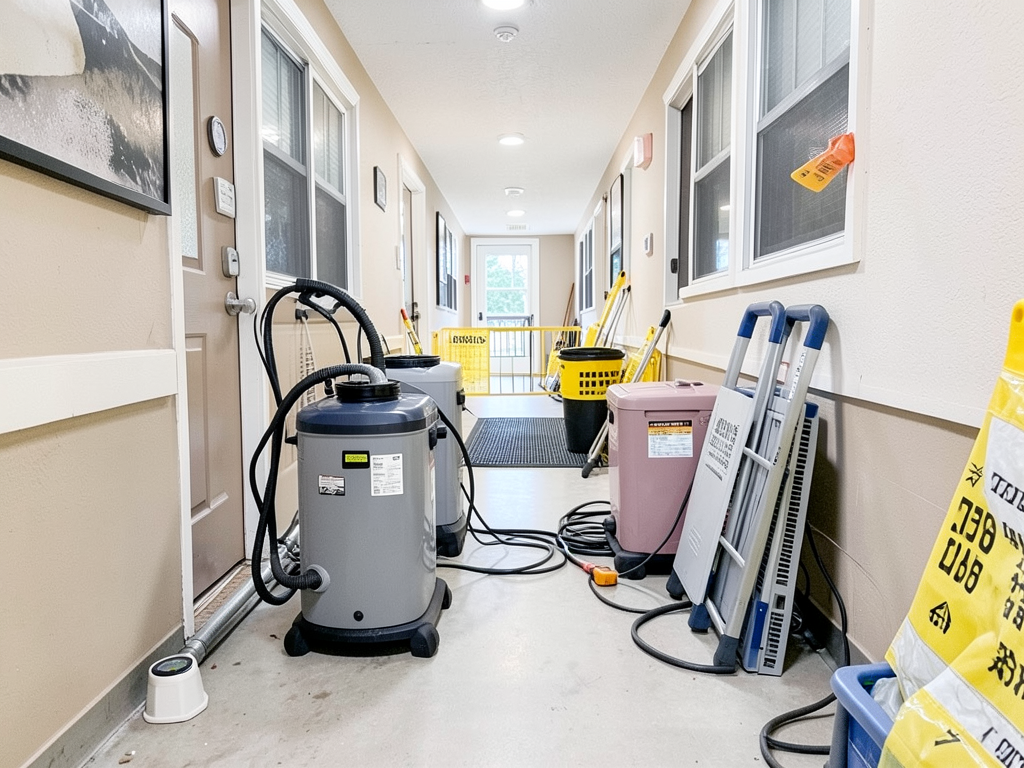
The drying phase requires specialized equipment for multi-unit structures. We deploy industrial dehumidifiers with capacities up to 200 pints per day, positioning them to create optimal air circulation through shared wall cavities. High-velocity air movers direct airflow through wall assemblies, while desiccant dehumidifiers handle particularly challenging moisture loads. Throughout this process, we monitor moisture levels daily, adjusting equipment placement based on real-time data.
Cleaning and sanitization follow drying. We use EPA-registered antimicrobial treatments to eliminate bacteria and prevent mold growth in affected areas. For shared wall assemblies, we often remove damaged insulation and drywall to ensure complete treatment of all surfaces. Our HEPA-filtered air scrubbers maintain air quality throughout the restoration process, capturing airborne particles that could spread between units.
The final phase involves reconstruction and coordination. We work directly with HOAs to ensure all repairs meet community standards and local building codes. This includes replacing fire-rated drywall, restoring insulation to proper R-values, and ensuring all plumbing repairs include appropriate permits. Our team coordinates scheduling with all affected residents to minimize disruption while maintaining project timelines.
- Emergency Containment
Establish barriers and extract standing water within 60 minutes of arrival.
- Moisture Assessment
Use thermal imaging and moisture meters to map damage extent across all affected units.
- Structural Drying
Deploy industrial dehumidifiers and air movers for 3-5 days minimum, monitoring daily progress.
- Cleaning and Sanitization
Apply antimicrobial treatments and HEPA filtration to all affected areas.
- Reconstruction
Coordinate with HOAs and inspectors to complete repairs meeting all code requirements.
Navigating HOA Insurance and Legal Considerations
Shared wall water damage in Portland townhomes inevitably involves multiple insurance policies and HOA regulations. Understanding these complexities before restoration begins prevents costly delays and disputes.
Oregon law generally places responsibility for plumbing and structural elements on the HOA for shared walls, while individual unit owners maintain responsibility for personal property and interior finishes. However, the specific language in each HOA’s covenants, conditions, and restrictions (CCRs) determines actual responsibility. Some HOAs require owners to carry specific water damage endorsements, while others maintain blanket coverage for common elements.
Our team has extensive experience working with Portland HOAs to navigate these requirements. We provide detailed damage assessments that clearly delineate between common element damage and unit-specific damage. This documentation proves essential when multiple insurance carriers become involved. We coordinate directly with insurance adjusters, providing the technical documentation needed to process claims efficiently.
Legal considerations extend beyond insurance. Oregon’s construction contract laws require specific protocols for multi-unit repairs, including notice requirements and lien procedures. When water damage affects multiple units, we ensure all contractors carry appropriate liability coverage and that all permits are properly filed with Multnomah County. Our contracts include provisions for dispute resolution specific to shared property scenarios.
Neighbor relations require careful management during restoration. Water damage often creates tension between affected residents, particularly when determining fault or responsibility for repairs. We maintain professional communication with all parties, providing regular updates and addressing concerns promptly. Our goal is to restore not just the physical structure but also the community relationships that make townhome living viable.
Documentation throughout the process protects all parties. We maintain comprehensive records including moisture readings, damage photographs, repair invoices, and communication logs. This documentation proves invaluable if disputes arise later regarding the extent of damage or the appropriateness of repairs. Many HOAs now require this level of documentation before approving restoration work on shared elements.
Preventing Future Shared Wall Water Damage
While some water damage events are unavoidable, many shared wall leaks in Portland townhomes can be prevented through proactive maintenance and monitoring. Understanding the most effective prevention strategies helps homeowners protect their investments and maintain good relationships with neighbors.
Regular plumbing inspections form the foundation of prevention. We recommend annual inspections of supply lines, drain pipes, and water-using appliances for townhome residents. During these inspections, technicians check for signs of corrosion, test water pressure, and examine connections for wear. Special attention goes to washing machine hoses, which should be replaced every five years regardless of visible condition. Installing stainless steel braided hoses provides additional protection against catastrophic failures.
Roof and exterior maintenance prevents another major source of shared wall damage. Portland’s wet climate demands regular roof inspections, particularly for townhomes with flat or low-slope roof sections common in older neighborhoods. We check flashing around chimneys, vents, and wall intersections, as these vulnerable points often fail first. Cleaning gutters and downspouts twice yearly prevents ice damming and directs water away from foundation walls where it could migrate into shared structures.
Water detection technology offers early warning for developing problems. Smart water sensors placed near water heaters, under sinks, and in mechanical closets can alert homeowners via smartphone when moisture appears. For townhome residents, these systems provide crucial early detection before damage spreads to shared walls. Some advanced systems can automatically shut off water supply when leaks are detected, preventing extensive damage.
Community-level prevention creates the strongest protection. HOAs that implement regular building envelope inspections, maintain plumbing systems proactively, and establish clear emergency response protocols experience fewer catastrophic water events. We work with property managers to develop these preventive programs, including scheduled maintenance of common plumbing systems and establishment of emergency contact procedures.
Individual unit owners can also take steps to minimize risk. Installing water hammer arrestors reduces stress on plumbing connections from pressure surges. Maintaining consistent indoor temperatures during cold snaps prevents freezing in vulnerable pipes. Understanding the location of main water shutoff valves allows quick response when problems occur. These simple measures, combined with professional maintenance, significantly reduce the likelihood of shared wall water damage.
Why Portland’s Climate Makes Shared Wall Restoration Unique
Portland’s specific climate conditions create challenges for shared wall water damage restoration that contractors from other regions rarely encounter. The combination of high annual rainfall, moderate temperatures, and occasional freezing creates a perfect storm for water-related building failures.
Portland receives approximately 44 inches of rainfall annually, concentrated in the winter months when buildings are least able to dry naturally. This persistent moisture load means water that enters shared wall assemblies during rainy seasons may remain trapped for months. Our restoration approach accounts for this by using desiccant dehumidification and maintaining drying operations longer than standard protocols might suggest. We monitor relative humidity levels inside wall cavities, ensuring they drop below 40% before considering drying complete.
The Willamette Valley’s temperature profile creates unique freeze-thaw challenges. While Portland rarely experiences extended freezing temperatures, the frequent freeze-thaw cycles common in late fall and early spring cause expansion and contraction in building materials. This movement stresses plumbing connections and roofing details, creating vulnerabilities that manifest as leaks during subsequent rainy periods. Our restoration work includes inspection for these climate-specific failure patterns, addressing not just the immediate damage but also the underlying causes related to Portland’s weather patterns.
Mold growth presents another climate-specific concern. Portland’s moderate temperatures and high humidity create ideal conditions for mold colonization within 24-48 hours of water exposure. In shared wall assemblies, this growth often occurs out of sight, behind drywall or within insulation. We use EPA-registered antimicrobial treatments specifically formulated for the mold species common to the Pacific Northwest, including Stachybotrys chartarum and various Penicillium species. Our remediation protocols exceed Oregon Health Authority guidelines for mold contamination in multi-unit structures.
Air quality management becomes critical in Portland’s climate. The same conditions that promote mold growth also allow dust and particulates to remain airborne longer than in drier climates. During restoration, we maintain negative air pressure in affected areas and use HEPA filtration to prevent cross-contamination between units. This approach protects residents from both mold spores and construction dust, addressing health concerns specific to Portland’s moisture-rich environment.
Building material selection for repairs must account for local conditions. We specify moisture-resistant materials rated for Portland’s climate, including mold-resistant drywall and stainless steel fasteners that won’t corrode in the marine air. Our reconstruction work includes vapor barriers and proper ventilation details that prevent future moisture accumulation in the same areas that previously failed.
Frequently Asked Questions
How quickly should I respond to a shared wall water leak in my townhome?
Immediate response within 60 minutes is critical for shared wall leaks. Water spreads rapidly through multi-unit structures, and delays allow damage to extend into adjacent units. Our team provides 24/7 emergency response with average arrival times under 60 minutes throughout Portland’s Boise and Eliot neighborhoods.
Will my insurance cover water damage that affects my neighbor’s unit?
Coverage depends on your policy specifics and the source of the leak. Most standard policies cover sudden accidental discharge but may exclude gradual leaks or maintenance-related failures. We work with insurance adjusters to document damage extent and help determine coverage responsibilities across all affected parties.
How long does professional restoration take for shared wall water damage?
Restoration timelines vary based on damage extent, but typical projects require 3-7 days for complete drying and cleaning, followed by 1-3 weeks for reconstruction. Multi-unit scenarios may extend these timelines due to coordination requirements with HOAs and adjacent residents.
Can I stay in my unit during restoration?
Often yes, though it depends on damage extent and restoration methods required. We use containment barriers and negative air pressure to isolate work areas, allowing many residents to remain in place. However, severe damage or mold contamination may require temporary relocation for health and safety reasons.
What certifications should I look for in a restoration company?
Look for IICRC certification in Water Damage Restoration (WRT) and Applied Structural Drying (ASD). Additional certifications in mold remediation and fire restoration indicate comprehensive expertise. Our technicians maintain current certifications and participate in ongoing training specific to Portland’s building types and climate challenges.
How do you handle mold discovered during restoration?
We follow EPA and Oregon Health Authority guidelines for mold remediation. This includes containment, HEPA filtration, removal of contaminated materials, and application of antimicrobial treatments. All remediation work includes third-party clearance testing to verify that mold levels return to normal background conditions.
What happens if the leak source is in my neighbor’s unit?
We document the damage source through moisture mapping and visual inspection, then coordinate with all affected parties and their insurance carriers. Our detailed reporting helps establish responsibility while ensuring all damaged areas receive proper restoration regardless of source location.
Do you work with HOAs and property managers?
Yes, we have extensive experience working with Portland HOAs and property management companies. We provide the detailed documentation and insurance coordination these organizations require, and we understand the specific approval processes for multi-unit building repairs in historic neighborhoods like Boise and Eliot.
What makes your service different from general contractors?
Water damage restoration requires specialized knowledge of moisture behavior, drying science, and microbial growth that general contractors typically lack. Our IICRC-certified technicians use industrial-grade equipment and follow standardized protocols that ensure complete restoration rather than just visible repairs.
How do you prevent damage to my neighbor’s property during restoration?
We use containment barriers, floor protection, and careful work sequencing to protect adjacent units. Our technicians are trained in multi-unit building protocols, and we maintain comprehensive liability insurance specifically covering restoration work in shared-wall scenarios.
Trust Local Experts for Your Townhome Restoration
Shared wall water damage in Portland’s Boise and Eliot townhomes requires more than basic water extraction. It demands understanding of local building practices, climate challenges, and the complex relationships between neighboring units. Our team brings 15+ years of experience specifically with Portland’s historic townhome structures, ensuring your restoration addresses both visible damage and hidden risks.
We understand the stress of water damage in a multi-unit building. The uncertainty about insurance coverage, the concern about neighbor relations, and the fear of incomplete restoration can feel overwhelming. That’s why we handle every aspect of the process, from emergency response through final reconstruction, with clear communication and professional expertise.
Our commitment goes beyond drying your property. We restore your peace of mind by ensuring all work meets or exceeds industry standards, complies with local building codes, and satisfies HOA requirements. We document everything thoroughly, communicate proactively with all stakeholders, and stand behind our work with comprehensive warranties.
When water threatens your Boise or Eliot townhome, don’t wait for the damage to spread. Call (503) 882-7766 today to schedule your inspection. Our IICRC-certified technicians are ready to respond 24/7, arriving within 60 minutes to begin protecting your home and your neighbors’ properties. Pick up the phone now before the next storm hits or the next pipe fails. Your townhome deserves expert care from professionals who understand Portland’s unique restoration challenges.
Don’t let shared wall water damage compromise your home’s structure or your community relationships. Contact us today for immediate assistance and experience the difference that local expertise makes in professional water damage restoration.
{
“@context”: “https://schema.org”,
“@type”: “BlogPosting”,
“headline”: “Professional restoration for shared wall water leaks in Boise and Eliot townhomes”,
“description”: “Expert water damage restoration for Boise and Eliot townhomes. We handle shared wall leaks, HOA coordination, and structural drying with IICRC-certified technicians.”,
“wordCount”: 3095,
“datePublished”: “2026-04-21T07:12:00.000Z”,
“dateModified”: “2026-04-21T07:12:00.000Z”,
“inLanguage”: “en-US”,
“mainEntityOfPage”: {
“@type”: “WebPage”,
“@id”: “https://evergreenwaterdamagerestorationportland.com”
},
“publisher”: {
“@type”: “LocalBusiness”,
“name”: “Evergreen Water Damage Restoration Portland”,
“url”: “https://evergreenwaterdamagerestorationportland.com”
},
“author”: {
“@type”: “Organization”,
“name”: “Evergreen Water Damage Restoration Portland”,
“url”: “https://evergreenwaterdamagerestorationportland.com”
},
“image”: {
“@type”: “ImageObject”,
“url”: “https://evergreenwaterdamagerestorationportland.com/wp-content/uploads/2026/03/professional-restoration-for-shared-wall-water-lea-1.png”
}
}
{
“@context”: “https://schema.org”,
“@type”: “LocalBusiness”,
“name”: “Evergreen Water Damage Restoration Portland”,
“url”: “https://evergreenwaterdamagerestorationportland.com”,
“address”: {
“@type”: “PostalAddress”,
“addressLocality”: “Portland”
},
“areaServed”: {
“@type”: “City”,
“name”: “Portland”
}
}
{
“@context”: “https://schema.org”,
“@type”: “FAQPage”,
“mainEntity”: [
{
“@type”: “Question”,
“name”: “How quickly should I respond to a shared wall water leak in my townhome?”,
“acceptedAnswer”: {
“@type”: “Answer”,
“text”: “Immediate response within 60 minutes is critical for shared wall leaks. Water spreads rapidly through multi-unit structures, and delays allow damage to extend into adjacent units. Our team provides 24/7 emergency response with average arrival times under 60 minutes throughout Portland’s Boise and Eliot neighborhoods.”
}
},
{
“@type”: “Question”,
“name”: “Will my insurance cover water damage that affects my neighbor’s unit?”,
“acceptedAnswer”: {
“@type”: “Answer”,
“text”: “Coverage depends on your policy specifics and the source of the leak. Most standard policies cover sudden accidental discharge but may exclude gradual leaks or maintenance-related failures. We work with insurance adjusters to document damage extent and help determine coverage responsibilities across all affected parties.”
}
},
{
“@type”: “Question”,
“name”: “How long does professional restoration take for shared wall water damage?”,
“acceptedAnswer”: {
“@type”: “Answer”,
“text”: “Restoration timelines vary based on damage extent, but typical projects require 3-7 days for complete drying and cleaning, followed by 1-3 weeks for reconstruction. Multi-unit scenarios may extend these timelines due to coordination requirements with HOAs and adjacent residents.”
}
},
{
“@type”: “Question”,
“name”: “Can I stay in my unit during restoration?”,
“acceptedAnswer”: {
“@type”: “Answer”,
“text”: “Often yes, though it depends on damage extent and restoration methods required. We use containment barriers and negative air pressure to isolate work areas, allowing many residents to remain in place. However, severe damage or mold contamination may require temporary relocation for health and safety reasons.”
}
},
{
“@type”: “Question”,
“name”: “What certifications should I look for in a restoration company?”,
“acceptedAnswer”: {
“@type”: “Answer”,
“text”: “Look for IICRC certification in Water Damage Restoration (WRT) and Applied Structural Drying (ASD). Additional certifications in mold remediation and fire restoration indicate comprehensive expertise. Our technicians maintain current certifications and participate in ongoing training specific to Portland’s building types and climate challenges.”
}
},
{
“@type”: “Question”,
“name”: “How do you handle mold discovered during restoration?”,
“acceptedAnswer”: {
“@type”: “Answer”,
“text”: “We follow EPA and Oregon Health Authority guidelines for mold remediation. This includes containment, HEPA filtration, removal of contaminated materials, and application of antimicrobial treatments. All remediation work includes third-party clearance testing to verify that mold levels return to normal background conditions.”
}
},
{
“@type”: “Question”,
“name”: “What happens if the leak source is in my neighbor’s unit?”,
“acceptedAnswer”: {
“@type”: “Answer”,
“text”: “We document the damage source through moisture mapping and visual inspection, then coordinate with all affected parties and their insurance carriers. Our detailed reporting helps establish responsibility while ensuring all damaged areas receive proper restoration regardless of source location.”
}
},
{
“@type”: “Question”,
“name”: “Do you work with HOAs and property managers?”,
“acceptedAnswer”: {
“@type”: “Answer”,
“text”: “Yes, we have extensive experience working with Portland HOAs and property management companies. We provide the detailed documentation and insurance coordination these organizations require, and we understand the specific approval processes for multi-unit building repairs in historic neighborhoods like Boise and Eliot.”
}
},
{
“@type”: “Question”,
“name”: “How do you prevent damage to my neighbor’s property during restoration?”,
“acceptedAnswer”: {
“@type”: “Answer”,
“text”: “We use containment barriers, floor protection, and careful work sequencing to protect adjacent units. Our technicians are trained in multi-unit building protocols, and we maintain comprehensive liability insurance specifically covering restoration work in shared-wall scenarios.”
}
}
]
}
{
“@context”: “https://schema.org”,
“@type”: “HowTo”,
“name”: “Professional Restoration Process”,
“step”: [
{
“@type”: “HowToStep”,
“position”: 1,
“name”: “Emergency Containment”,
“text”: “Establish barriers and extract standing water within 60 minutes of arrival.”
},
{
“@type”: “HowToStep”,
“position”: 2,
“name”: “Moisture Assessment”,
“text”: “Use thermal imaging and moisture meters to map damage extent across all affected units.”
},
{
“@type”: “HowToStep”,
“position”: 3,
“name”: “Structural Drying”,
“text”: “Deploy industrial dehumidifiers and air movers for 3-5 days minimum, monitoring daily progress.”
},
{
“@type”: “HowToStep”,
“position”: 4,
“name”: “Cleaning and Sanitization”,
“text”: “Apply antimicrobial treatments and HEPA filtration to all affected areas.”
},
{
“@type”: “HowToStep”,
“position”: 5,
“name”: “Reconstruction”,
“text”: “Coordinate with HOAs and inspectors to complete repairs meeting all code requirements.”
}
],
“image”: “https://evergreenwaterdamagerestorationportland.com/wp-content/uploads/2026/03/professional-restoration-for-shared-wall-water-lea-1.png”
}
{
“@context”: “https://schema.org”,
“@type”: “BreadcrumbList”,
“itemListElement”: [
{
“@type”: “ListItem”,
“position”: 1,
“name”: “Home”,
“item”: “https://evergreenwaterdamagerestorationportland.com”
},
{
“@type”: “ListItem”,
“position”: 2,
“name”: “Blog”,
“item”: “https://evergreenwaterdamagerestorationportland.com/blog”
},
{
“@type”: “ListItem”,
“position”: 3,
“name”: “Professional restoration for shared wall water leaks in Boise and Eliot townhomes”
}
]
}
{
“@context”: “https://schema.org”,
“@type”: “Service”,
“serviceType”: “Water Damage Restoration”,
“provider”: {
“@type”: “LocalBusiness”,
“name”: “Evergreen Water Damage Restoration Portland”,
“url”: “https://evergreenwaterdamagerestorationportland.com”
},
“areaServed”: {
“@type”: “City”,
“name”: “Portland”
},
“description”: “Expert water damage restoration for Boise and Eliot townhomes. We handle shared wall leaks, HOA coordination, and structural drying with IICRC-certified technicians.”
}